


There are two main options, standard roll and reverse roll, and each has its advantages. Let's take a look at how they differ and which might work best for your windows.
What Is the Difference Between Standard and Reverse Roll Roller Blinds?
The difference comes down to which side of the roller the fabric hangs from.
- Standard roll: The fabric drops from behind the roller, positioning it closer to the window.
- Reverse roll: The fabric drops over the front of the roller, positioning it further away from the glass.
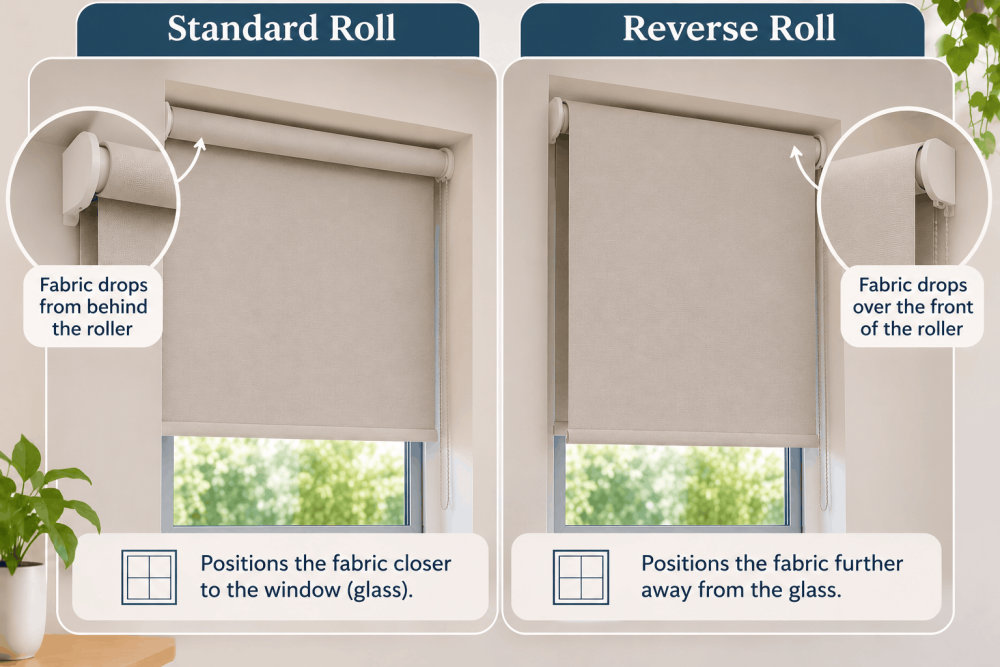
Here's a quick comparison of the two options:
| Feature | Standard Roll | Reverse Roll |
| Fabric position | Hangs behind the roller | Hangs in front of the roller |
| Distance from glass | Generally closer | Generally further away |
| Window handle clearance | Less clearance | Can provide extra clearance |
| Appearance | Roller may be more visible from inside the room | Can help conceal the rolled fabric |
| Light gaps | May help minimise gaps | May allow more light around the edges |
Neither option is necessarily better than the other. It depends on your window's design, any handles or obstructions, and the finish you prefer.
When Should You Choose Standard Roll Roller Blinds?
Standard roll is often a good choice if you want your roller blinds to sit as close to the window as possible.
Because the fabric hangs behind the roller, it generally sits closer to the glass, creating a neat, discreet finish while potentially helping to minimise light gaps.
If your window handles don't get in the way and there's enough clearance for the fabric to hang freely, you may not need the extra space provided by reverse rolling.
When Should You Choose Reverse Roll Roller Blinds?
Reverse roll can be a better option if your windows have handles or other features that might get in the way of the fabric.
As the fabric drops over the front of the roller, it hangs further away from the glass. This extra clearance can help prevent the blind from catching on projecting handles or other obstructions.
You might also prefer the appearance, as the rolled-up fabric can be less visible from inside the room, depending on the blind's design.
However, reverse rolling won't necessarily solve every clearance issue. The space available will depend on your window and the particular roller blind system.
Does Roll Direction Affect Light Gaps and Privacy?
Yes, the direction your roller blind hangs can affect how much light enters around the edges, particularly if it's fitted inside a window recess.
With a standard roll, the fabric generally sits closer to the glass, which can help minimise light gaps. Reverse rolling positions the fabric further forward, potentially allowing more light to enter around the sides.
However, neither option will completely eliminate light gaps. Even with blackout fabric, some light may still enter around the edges of a roller blind.
When it comes to privacy, both standard and reverse roll blinds can provide effective coverage when closed. The fabric you choose, its opacity and how well the blind covers your window will generally make more of a difference than the roll direction itself.
What Else Should You Consider Before Choosing a Roll Direction?
Alongside appearance and window handle clearance, there are a few other things worth checking before deciding.
Cassette Design
Some roller blinds have a cassette or fascia that conceals the roller mechanism. If you're choosing this type of blind, the appearance of the rolled fabric may be less of a consideration, as it's already hidden from view.
Window Recess and Mounting Position
The depth of your window recess and where the blind is positioned can affect how much clearance you have.
It's also worth knowing that roll direction and bracket mounting are two separate decisions. Our guide to top-fixed vs face-fixed blinds explains the difference between mounting positions.
Corner Windows
If you're fitting roller blinds to corner windows, you'll also need to consider how the blinds sit alongside one another. The roll direction may influence the clearance between neighbouring blinds, although the best arrangement will depend on the window layout and chosen system.
For more advice, take a look at our guide to choosing blinds for corner windows.
Made-to-Measure Roller Blinds from Aspiration Blinds
Not sure which roll direction would work best for your windows? At Aspiration Blinds, we can help you find the right arrangement for your home.
We'll take into account your window handles, available space and the finish you're looking for, helping you choose a suitable option for your chosen blind system.
From measuring through to professional fitting, we'll make sure your new blinds are a great fit for your windows.
Explore our range of made-to-measure roller blinds or get in touch to arrange a consultation.